.svg)

Choosing a solar installer can feel overwhelming; between vague quotes, door‑to‑door salespeople, and pricing that feels all over the place, it’s no wonder homeowners feel uncertain about who to trust. Going solar should be a wonderful experience where you as the homeowner feel confident in your purchase, knowing exactly what you are getting and being happy with the service provided by your installer. This guide helps break down five major red flags when choosing a solar contractor, why each one matters, and how to protect yourself before signing anything! Let’s dive in.
1. HighPressure Sales Tactics
If you’re told a version of “this deal expires today”, or “you’re going to run out of transformer space because all your neighbours are going solar” (my personal favourite)
That’s your sign to step back, and NOT feel pressured to decide on the spot. Politely ask them to give you some time and them leave. Gain some breathing room. I can promise you, you won’t be missing the deal of a lifetime. There are many discounts throughout the season offered by different installers and the chances of you not being able to go solar, even a year from now, are next to zero.
Highpressure sales are used to prevent you from comparing quotes or reading the fine print and to strongarm you into giving in. Solar is a 25year investment. Don’t rush into it. A good solar company will:
- Step back when you need time
- Encourage you to compare options
- Provide documentation you can review at your own pace
- Explain their pricing transparently
If someone can’t respect your need for time, they’re not respecting the size or importance of your investment and probably don’t deserve your money.
2. Non-Itemized Quotes
A proper solar quote is detailed, itemized, and transparent, it should NOT be a single number with a smile.
Solar proposals and quotes can be a lot to decipher, because they’re usually about 10 pages long and should explain multiple things including:
1. The contractor’s solar design on your roof – rendered images showing you what your system will look like. It should look well though-out; ideally as though it was always meant to be there.
2. System information including the brand and model of solar panels, inverters and mounting/racking system. system size in AC + system size in DC – yes they’re different and can be confusing.
Quick tangent: System size in AC is your total inverter size (I say total as you will have multiple inverters if you get a microinverter quote) and system size in DC is the total size of the solar panels (if you have 10x 500W panels, it would be a 5kW DC system)
3. Percentage Offset - how much of your last 12-months of consumption your solar will produce – we call this your percentage offset, and usually between 102 – 107%. This post isn’t about this, but it’s worth mentioning that in Alberta we have a hard cap on how much solar we can install for grid-tied systems.
4. Financial metrics, which sometimes includes ROI and payback – watch out for two things here: price of electricity per kWh (it should be reasonably close to your actual current costs), and rate escalation (how much the contractor is assuming electricity costs will rise per year which, if higher than 6%, is not representative of history and will make the financial returns unrealistic).
5. Warranties, which will include the panel (module) warranty, the inverter warranty, the racking warranty and the workmanship & installation warranty.
6. …And, of course, a final number or an itemized quote. A proper, trustworthy quote should include:
- Cost of the modules
- Cost of the inverter & electrical (including inverters, subpanels and combiner boxes, breakers, cables)
- Racking system (usually conglomerated but made up of talons, rails, clamps, lugs, splices, consumables, etc.)
- Labour
- Any electrical upgrade requirements (panel, cable, breaker upgrades)
- Depending on the county, a structural engineering assessment – looking at you Okotoks, Airdrie and RockyView counties!
- Total cost without and with GST
You can only compare quotes fairly when they are broken down line by line - and get a feeling for how much component costs are at that point in time. A lack of detail is how some installers hide additional charges, cheaper equipment, and design shortcuts Sometimes you might receive a short proposal with a single quoted cost. If that is the case, ask the installer to elaborate on their quote and, if they don’t, look somewhere else.
3. No On-Site Visit
If they design your system without seeing your home, you’re getting a one-size-fits-none solution. All installers can generate quotes using only satellite imagery, especially if they pay for a good software with LIDAR and Eagleview. But you can’t get the whole picture of someone’s house from satellite imagery alone: from vents that are hard to see to trees that have been removed or have grown over time causing shading, to electrical or installation challenges that might be present in the home. A site visit is a crucial part of quoting, and it matters because each home is unique. A system designed without a site visit can lead to:
- Lower-than-promised production
- Modules installed on poor roof faces
- Visible conduit where it could have been hidden
- Unforeseen costs from necessary electrical upgrades after installation begins
- Systems not compatible with future batteries or EV chargers
- A solar system installed on an aged roof that will soon need to be replaced
A site visit shows an installer who cares about the details and is already treating you like a client. At a site visit, a good contractor will take the time to assess your shingles’ conditions and start to plan the conduit run down from your roof to your electrical panel, demonstrating to you that you are worth their time even if they don’t get your business.
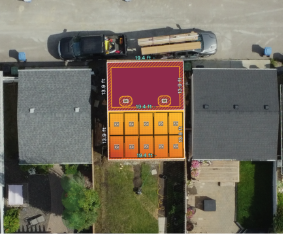
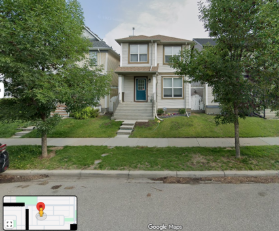
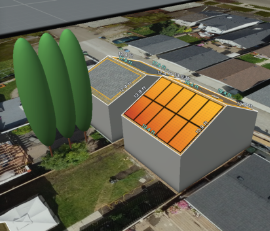
I’ll share my home as an example. If you look at the first image, you will see a design of my garage and my solar system. From the bird’s eye view only, there seems to not be any shading. Google Maps is not very helpful because it only shows an image of my front door (second image). But when you look at the third image, you can clearly see my neighbour’s lovely poplar trees. If we hadn’t modelled those trees, my solar system would be producing 112% of my consumption, but with the trees, my production drops to 104%. This means that we hadn’t modelled the trees, we could only have installed 9 modules instead of 10 leading to a less pretty and lower producing system. A site visit is crucial to assess your home and create a high quality design and quote that is unlikely to get revised on you.
4. An Offer that is Too Good to be True
Some installers promise savings or system performance that simply aren’t possible in Alberta. For example, any contractor offering you more than 110% offset is ignoring utility limits - your system cannot be designed larger than your last 12‑months of consumption (+5–10% buffer), as set by Alberta utilities. This means that they are either overpromising on their design’s production, or they don’t plan on getting the necessary permits and approvals. Yikes!
Another red flag is aggressive financing that sounds too good to be true: 0% for 3 - 5 years is often paired with high interest rates afterward or inflated upfront pricing that quietly covers the cost of that temporary discount. Always ask an installer to break down the math behind their financing offer.
A trustworthy installer will explain what really impacts your savings:
- roof orientation
- shading
- system size
- your electricity rates
- rate escalation assumptions
- weather patterns
- your consumption habits
When the modelling is honest, the assumptions realistic, and the design sized properly, your savings will reflect real-world performance, not inflated promises.
5. Evasive About Permits, Inspections, or Utility Approval
In Alberta, a solar system isn’t just about panels and production - it must also be properly permitted, inspected, and approved before it can legally operate. Every installation requires municipal permits and inspections, a Microgeneration (interconnection) application, and in some cases, a structural engineering approval letter. You’ll also need a Single Line Diagram and safety labels applied to every point where the solar system ties into your electrical equipment.
That’s why it’s a red flag if a contractor glosses over paperwork or can’t clearly explain the approval steps. Skipping these requirements can leave you with a system you legally cannot energize, could get you in trouble with your utility company, or even create insurance and safety issues - all of which can lead to expensive rework or even fines.
Canada in general has a reputation for over-bureaucratization, but solar permits and inspections are crucial because, like any other electrical add-on or upgrade, there are safety concerns. The utility, the municipality, and your contractor are concerned about ensuring your safety as the system owner, the safety of front-line defences (police, fire-fighters, EMTs) and the safety of the utility and their workers. We all work actively and collaboratively to ensure every system is compliant and beneficial to Alberta’s grid.
It’s part of our job as contractors to take care of all required permits, inspections and interconnection approvals for you, and go over the timeline with you. If you have any concerns about your system, reach out to your contractor, to your municipality, or give us a call!
Conclusion
A trustworthy solar installer makes everything clear from day one: no pressure, no vague promises. Your solar system should be high-quality, engineered, permit‑compliant, and tailored to your home. Choosing the right installer is the most important step in your solar journey, so if you’re unsure about a quote, or want a professional eye on the details, reach out and I’ll walk you through it.